

Sector Update / Energy / Click here for full PDF version
Author(s): Ryan Winipta ; Reggie Parengkuan
- There has been contradicting statements between US & Iran amid peace-deal negotiations along with its terms & conditions.
- However, we think peace deal is bound to happen as several actions were taken by O&G players to restart production, particularly the GCCs.
- US$80/bbl oil prices level were too low with resumptions of China import set to act as catalyst; opportunity also persist in coal players.
Contradicting statements to persist; but peace deal set to be achieved
There has been contradicting statements from either or both US & Iranian officials surrounding the terms & conditions for a peace-deal, this includes the release of Iranian frozen funds, sanctions, uranium enrichment, among other topics. However, we think peace-deal is set to be achieved between both parties, due to several actions that has been or will be taken by oil & gas producers (which only happen if the deal is indeed heading towards positive direction): 1) Qatar to resume production of Ras Laffan LNG operation and eventually exports, 2) ADNOC selling 30mn bbls of crude supply to Asian refiners in Jun26, 3) Iraq plans on ramping-up production and has already been discussing terms with shippers through Strait of Hormuz. Additionally, physical price has also reflected such scenario; with Dated Brent (physical oil) trading on par with the paper Brent oil (Fig. 3). Post peace deal, we think market may shift their focus on China's import flow & Strait of Hormuz traffic, along with storage/inventory positions.
Key metrics: China imports, SoH traffic, and inventory positions
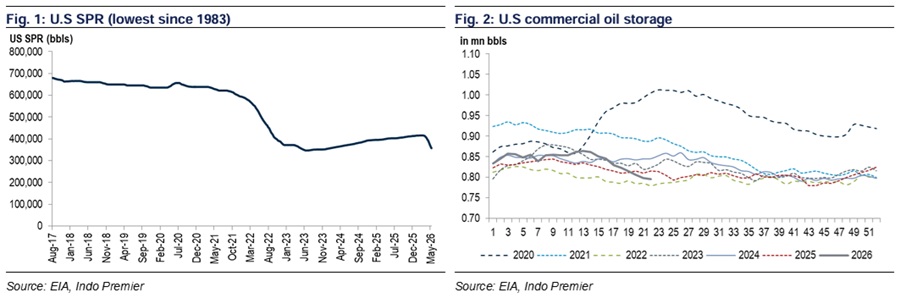
One of the key reasons behind oil price downtrend from its US$123/bbl peak is the decline in import flow from China to 7-8mn bblpd level in May26 vs. 13mn bblpd+ level in Mar26 (Fig. 4). This has also helped to cushion shortage of ~11mn bblpd production shut-in from Hormuz-linked producers, combined with US SPR release with a run-rate of 1-2mn bblpd on average. Hence, recovery in China imports flow & depleted oil reserve would likely act as catalyst to oil price as restocking is likely to conducted. Meanwhile, we think traffic recovery in Hormuz is likely to be met with hurdles with sea mines, insurance issue, among others. We expect oil price to trade at US$80-90/bbl level in short to medium term.
Thermal coal price likely to remain elevated
Newcastle coal price has been up by +24% since the war in Mar26 while ICI prices also went-up by 19-24% during similar period. Unlike oil price, coal price has experienced temporary supply disruption due to coal mines incident in Shanxi, combined with RKAB quota cut in Indonesia, which led to a tight supply-demand balance. We think thermal coal price is also likely to remain elevated ahead of summer restocking season, despite potential relaxation on RKAB quota in Indonesia (quota previously cut to 600Mt).
Maintain Neutral on Energy sector; tactically positive on coal
Both (oil proxy) and coal players - i.e. , , , , has experienced 19-42% share price decline since its peak. We remain Neutral on energy sector but tactically positive on thermal-coal players ahead of 2Q26F earnings result, which shall reflect higher coal price qoq in addition to potential relaxation in RKAB , which shall benefit & . Our order of preference: > > >
Sumber : IPS